60×60 ceiling panels
not all of them are really sound absorbing
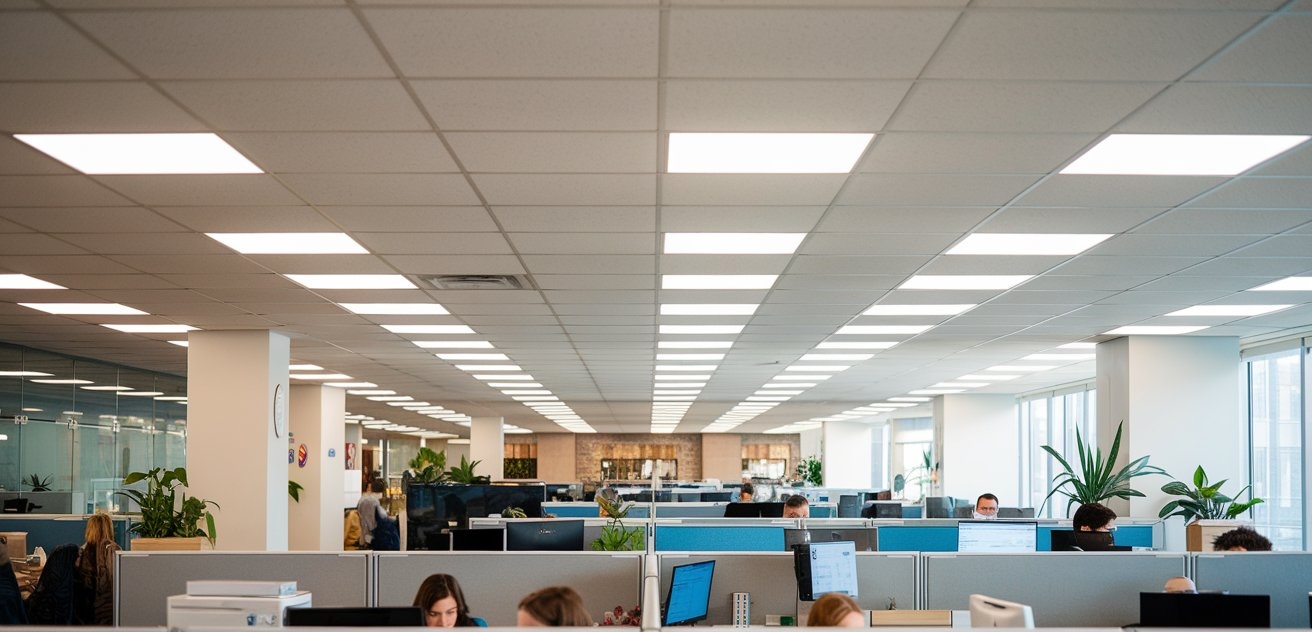
Walking through open-space offices, canteens, supermarkets or schools,it is common to notice the classic 60×60 modular panels used in suspended ceilings. They are often hastily referred to as “gypsum board” or, loosely, “sound-absorbing.” But the reality is quite different: not all 60×60 panels offer true sound-absorbing performance.
In this article we will find out what is meant by “sound-absorbing,” how to recognize a truly acoustically effective panel, and why it is important to distinguish between a simple aesthetic coating and a solution designed to reduce reverberation.
1. What does “sound absorption” mean?
Sound absorption is the ability of a material to “capture” sound energy and attenuate acoustic reflections within a room. When a sound encounters a reflective surface, it tends to bounce back, generating annoying echo or reverberation phenomena. In contrast, a sound-absorbing panel allows sound waves to penetrate a porous or fibrous structure, where the energy is partly dissipated as heat.
-
- A well-designed sound-absorbing ceiling can improve the acoustic comfort of a room by reducing background noise and improving the clarity of conversations.
- A “normal” non-sound-absorbing panel, on the other hand, is almost totally reflective: its contribution to noise reduction is very low or nil.
2. 60×60 ceiling panels: the materials and differences
There are different types of panels, which can be classified according to the material and the structure:
-
- Plain plasterboard panels
- Often employed for aesthetic reasons or to hide implants.
- Deprived of holes/microholes or porous inner layers, the sound absorption power is extremely limited (absorption coefficient < 0.15).
- Mineral fiber panels (rock wool, glass wool) or cellulose fiber
- Designed with porous/fibrous structures that allow a good level of absorption.
- When combined with acoustic veil or microperforated surfaces, they can reach values of αw (absorption coefficient) or NRC (Noise Reduction Coefficient) > 0.70.
- Lightweight or fiber-reinforced gypsum panels
- Some versions have microholes or perforations and are coupled with sound-absorbing fabrics on the back.
- They combine the appearance of plaster with good performance in reducing glare.
- Composite panels
- Composed of layers of different materials (e.g., mineral fiber with surface coating).
- They offer advanced acoustic performance, being able to include thermal insulation or moisture resistance as well.
- Plain plasterboard panels
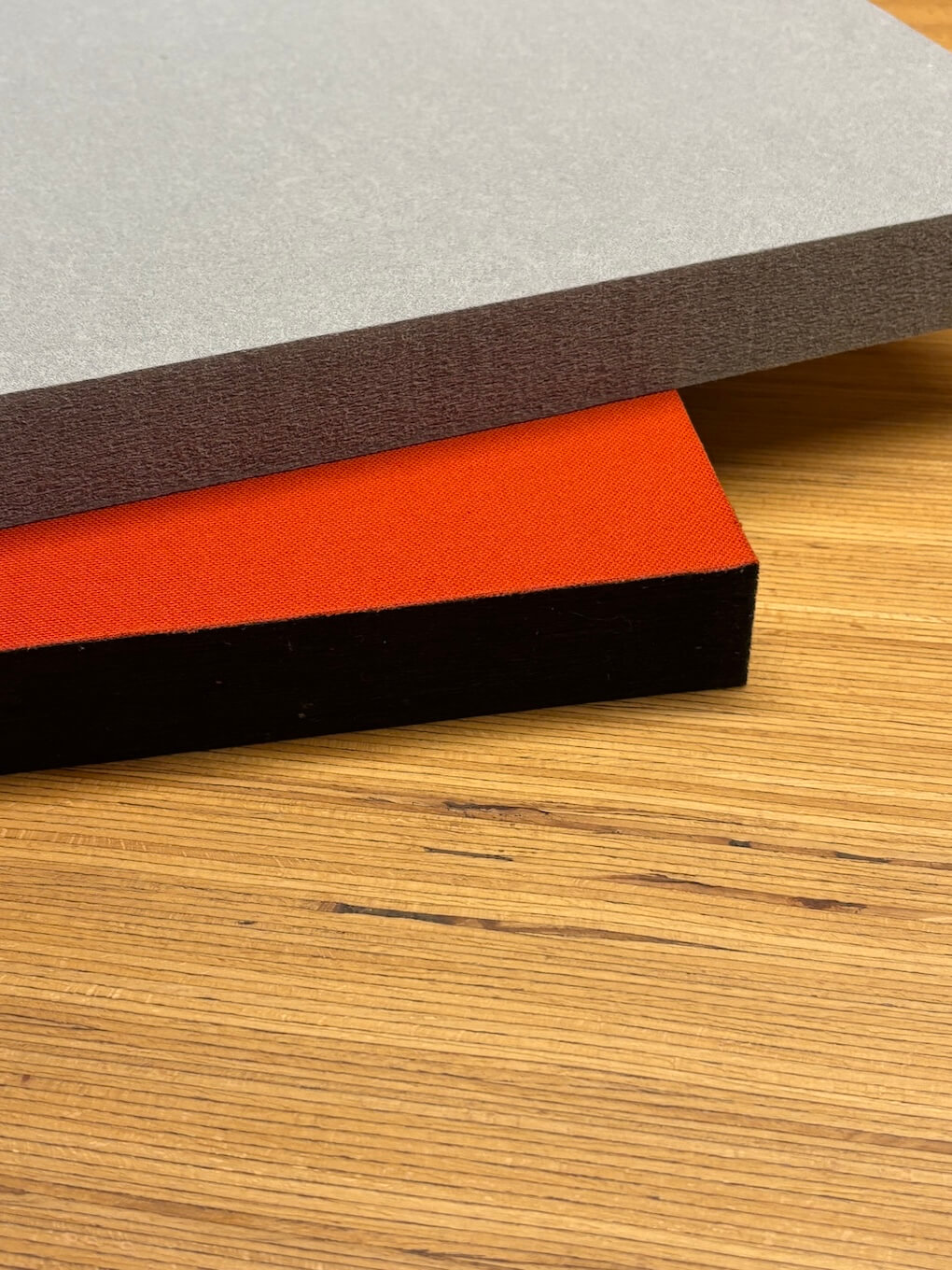
*image of our Quadra™ product.
3. The importance of surface and mounting
To be truly sound-absorbing, a panel must have:
- Surface permeable to the passage of sound waves (holes, microholes or porosity).
- Fibrous or porous core that “traps” and dissipates sound energy.
- Sufficient air space behind the panel (air gap) to improve absorption, especially at low-mid frequencies.
If a panel is made of compact plasterboard or installed without an absorbent material on the back, its sound-absorbing power will be greatly reduced.
4. How to recognize a real soundproof panel.
-
-
- Check the data stated by the manufacturer
- Look for the αw value (according to UNI EN ISO 11654) or theNRC (Noise Reduction Coefficient). Values ≥ 0.70-0.80 indicate good absorption.
- Check the data sheet: if no acoustic parameter is mentioned, the product is most likely not soundproof.
- Observe the surface of the panel
- Presence of holes, microholes, fibrous fabric coverings.
- Completely smooth panels with no perforations are usually ineffective in reducing glare.
- Check the data stated by the manufacturer
-
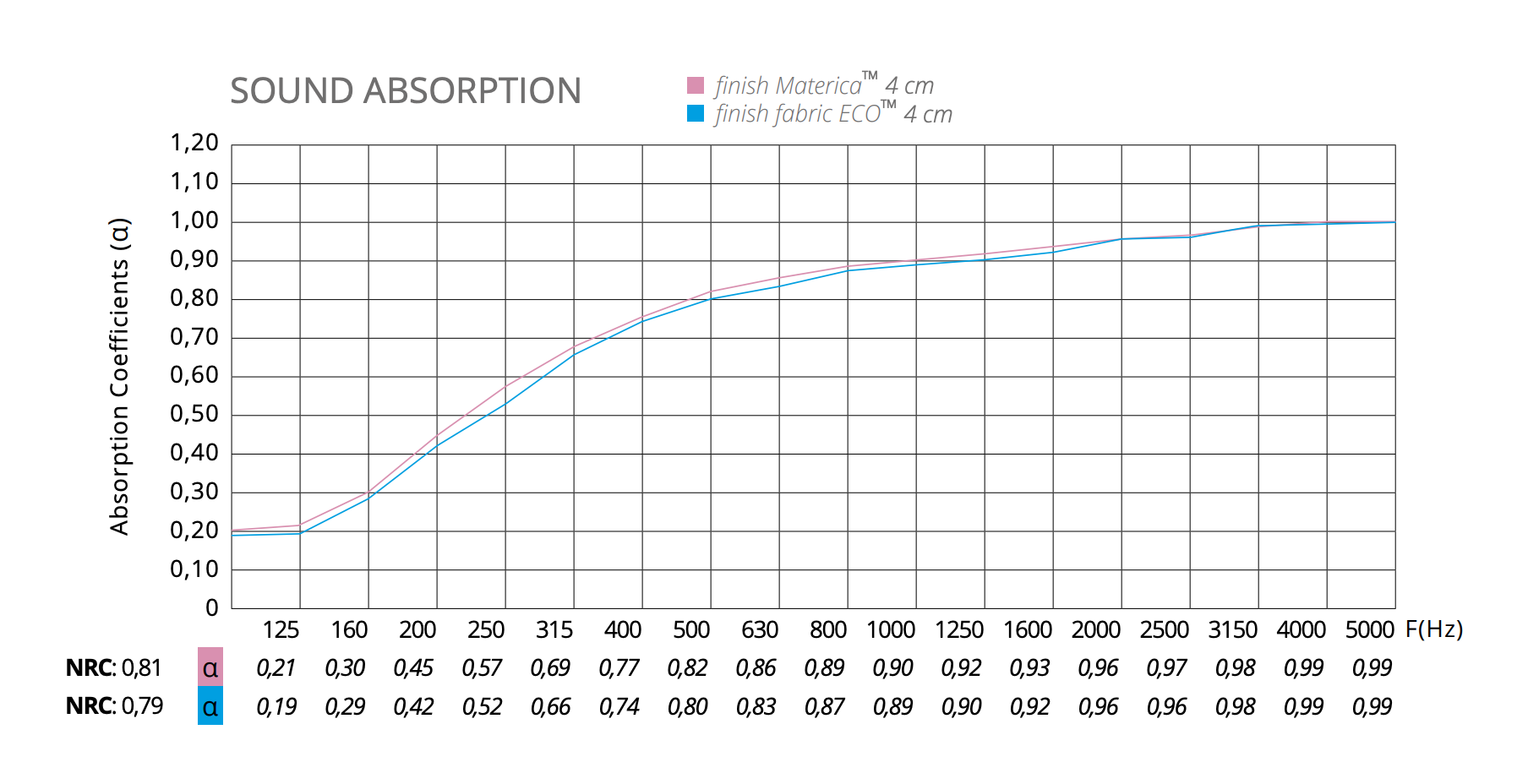
5. Why is sound absorption so important
The presence of truly sound-absorbing ceilings affects the acoustic comfort:
- Open-space offices: reduces rumbling, facilitating concentration and productivity.
- Canteens and restaurants mitigates general noise, improving communication between diners and acoustic well-being.
- Schools and classrooms increases speech clarity, promoting learning.
- Health care facilities a less noisy environment contributes to a better quality of hospital stay.
Consequences of making the wrong choice
Using 60×60 panels with little or no sound absorption can generate:
- High background noise: with disturbance and stress for the people present.
- Poor speech intelligibility Classrooms, conference rooms and offices become noisy and uncomfortable environments.
- Regulatory non-compliance: especially in school or public settings, there is a risk of non-compliance with legal standards.
6. Practical tips for choosing
- Request data sheets: it is important to view the values of αw or NRC.
- Compare different solutions: manufacturers offer panel lines with different acoustic performance.
- Check the installation: a poorly laid ceiling or one without an adequate air gap loses much of its effectiveness.
- Combine other systems: wall panels, baffles, and acoustic islands can complement the intervention in particularly noisy environments.
7. A solution proposed by Garvan
Among the various solutions on the market, Garvan offers the QUADRA sound-absorbing ceiling tiles., Designed to combine:
- High sound absorption: due to the internal structure and materials used.
- Modern design: suitable for professional, public and residential settings.
- Easy installation: designed to fit into standard 60×60 modular structures.
This type of panel meets the needs of those seeking not only an aesthetic coating, but a certified and truly effective solution against glare.
Not everything referred to as “gypsum board” or “acoustic” automatically corresponds to a sound-absorbing product. If the goal is to improve the acoustic comfort of a room, it is critical:
- Check the stated acoustic parameters (αw, NRC).
- Evaluate materials and finishes (drilling, layering, cavity).
- Rely on certified solutions and industry professionals.
A good sound-absorbing ceiling, properly installed, results in quieter, more comfortable and productive environments that benefit everyone.
Info Request
Our technicians will get back to you as soon as possible.
Garvan Acoustic offers customers interested in purchasing, the opportunity to analyze their current situation in a video call with one of our technicians.

Emotions are a fundamental part of every living being’s life. Sound and design are, for me, some of the most powerful means to generate and convey them. To share this passion, I co-founded Garvan in 2005 with Andrea Martelli.